
Restoration of damaged, cracked, uneven, or worn concrete floors using advanced repair mortars, resurfacing compounds, and protective coatings to restore structural performance and surface finish.
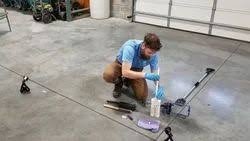
1) Surface Preparation: Thoroughly Clean The Floor Using A Degreaser To Remove Oil, Grease, And Dirt. For Optimal Adhesion, The Surface Should Be Ground Down To Achieve A Concrete Surface Profile (CSP) Of 3 To 5.
2) Repairing Imperfections:
3) Cracks: Use A V-Grinder To Open And Clean The Crack, Then Fill It With Silica Sand And A Dual-Cartridge Crack Filler.
4) Holes And Spalls: Fill Larger Gaps With A Suitable Concrete Repair Mortar, Such As ARDEX A 46
5) Priming: Apply A Primer To The Clean, Dry Area. This Prevents The Porous Concrete From Absorbing Water From The Resurfacing Compound, Which Can Lead To Poor Performance.
1) Mixing: Mix The Resurfacing Powder (Like ARDEX K 301) With Water Until It Reaches A Lump-Free Consistency.
2) Pouring: Pour The Mixture Onto The Floor While The Primer Is Still Damp. Most Self-Leveling Compounds Will Flow Out And Smooth Themselves Within 10–30 Minutes.
3) Sealing And Finishing: Once Cured, Apply A Protective Coating Or Sealer To Prevent Water Penetration And Wear