
Advanced carbon fiber wrapping for beams, slabs, and columns to enhance structural capacity.
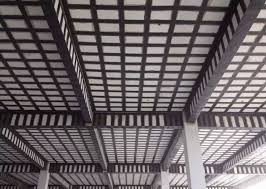
- Structural Strengthening: Used To Reinforce Concrete, Steel, And Timber Structures.
- Columns & Beams: Increases Load-Bearing Capacity And Prevents Buckling Or Sagging Without Adding Significant Weight.
- Seismic Retrofitting: Enhances Ductility And Strength, Helping Buildings Withstand Earthquake Forces.
- Repair & Rehabilitation: Restores Structural Integrity To Aging Or Damaged Members Affected By Corrosion, Cracks, Or Fire.
- Infrastructure: Strengthening Bridges, Flyovers, And Docks To Handle Increased Traffic Loads Or Repair Fatigue Damage.
- Automotive & Aesthetics: Used As A Vinyl Wrap For Vehicles To Provide A “High-Performance” Look, Protect Underlying Paint, And Offer A Cost-Effective Alternative To Actual Carbon Fiber Parts
1) Surface Preparation: The Substrate (E.G., Concrete) Is Cleaned, Ground, And Smoothed To Remove Dust, Oil, And Loose Material.
2) Corner Rounding: Sharp Corners On Columns Are Ground Into Smooth Arcs (Typically A Radius Of ) To Prevent The Fiber From Breaking At Sharp Edges.
3) Primer Application: A High-Adhesion Epoxy Primer Is Applied To Create A Strong Bonding Layer.
4) Putty/Leveling: Uneven Areas Or Cracks Are Filled With Epoxy Putty To Ensure A Uniform Surface.
5) Adhesive Coating: A Specialized Saturant Resin (Impregnating Adhesive) Is Applied Over The Primed Surface.
6) Fiber Wrapping: The Carbon Fiber Fabric Is Carefully Positioned And Pressed Onto The Surface.
7) Saturation & Rolling: A Second Coat Of Resin Is Applied, And A Roller Is Used To Eliminate Air Bubbles And Ensure The Resin Fully “Impregnates” The Fabric.
8) Curing: The System Is Left To Cure For A Specified Time To Reach Maximum Strength